Run the numbers on Hamilton and the story looks simple. As of September 2026, Resideline's tracking of 497 closed sales in the city over the trailing six months put the median sold price at $204,000, with a median price per square foot of $153. Redfin's August 2026 update, working from a different three-month window, showed a $220,000 median and $165 per square foot, down 6.5 percent from a year earlier. Either way you cut it, Hamilton is priced well below what buyers are used to seeing a few exits down I-75.
What those numbers don't tell you is where that cheap square footage actually sits. A meaningful share of it is inside one of Hamilton's three federally recognized historic districts, and buying there comes with a specific trade that the median price never mentions: a design review board that has a say in your windows, and a tax incentive that gets bigger the older your house is.
Where the low price per square foot actually lives
Hamilton has three neighborhoods listed on the National Register of Historic Places, each with its own character and its own paperwork.
- Dayton-Lane, listed in 1985, holds more than 200 structures built for the industrialists who ran Hamilton's factories at the turn of the last century.
- German Village, listed in 1991, is a nine-block district just north of downtown along the Great Miami River, built as the city's first residential development outside old Fort Hamilton, with a mix of Queen Anne, Italianate, Eastlake, and Gothic Revival houses from the 1800s.
- Rossville, listed in 1975, covers 123 contributing buildings on the west bank of the river, including the large mansions along South D Street and the stately homes on Ross Avenue. The Rossville Historic Preservation Organization has coordinated preservation work in the neighborhood since 1974, and its home and garden tour runs every other year.
A nonprofit called Historic Hamilton Inc. acts as the umbrella group tying the three districts together, with representatives from other older neighborhoods like Lindenwald and Highland Park sitting on its board even though those areas aren't formal historic districts themselves.
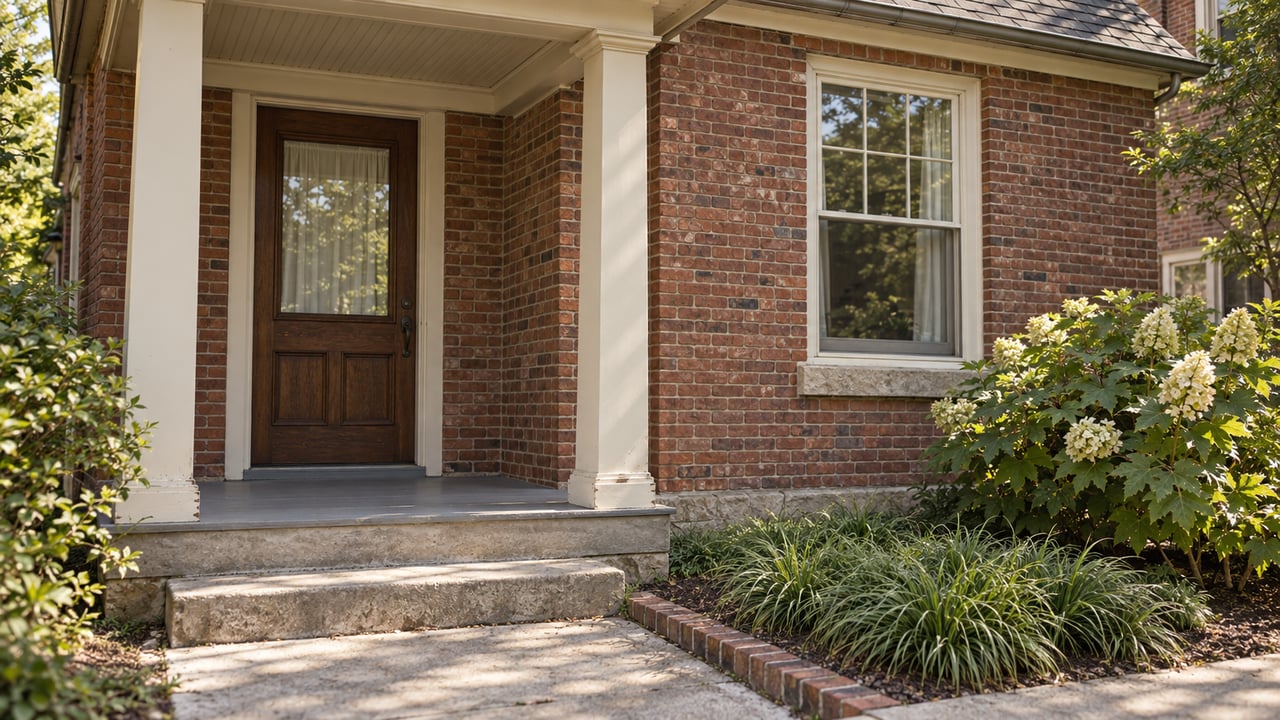
These are old, dense, architecturally distinct blocks, and old houses with smaller footprints and modest lots tend to pull the citywide price per square foot down. That's part of why Hamilton's number looks so different from a newer-construction suburb. It isn't that Hamilton homes are simply cheaper for the same product. A lot of that inventory is a different product: pre-1900s construction, original details, and a location inside a district where the city has a formal say in how you maintain the exterior.
The board that reviews your windows before you replace them
Buy a house in Dayton-Lane, German Village, or Rossville, and exterior work goes through Hamilton's Architectural Design Review Board. The ADRB meets the first and third Tuesday of every month at 4:00 pm in City Council Chambers at 345 High Street, and its published guidelines cover everything from routine maintenance and repairs to demolitions, replacing historic windows, adding vinyl siding, and removing box gutters. The city backs this up with a brochure aimed squarely at buyers, titled Living in a Historic Home, that walks through what does and doesn't need a hearing before you touch it.
None of this is unusual for a historic district, and it isn't a reason to avoid one. It is a reason to budget differently. A roof replacement or a window swap that would be a same-week decision in a newer subdivision can mean a trip to City Council Chambers first. If you're comparing a listing in Rossville to a similarly priced listing in a non-historic part of town, the ADRB is the line item the spreadsheet doesn't show you.
The tax break that rewards the oldest houses the most
Here's where the trade tilts back in the buyer's favor. Hamilton created its own Community Reinvestment Area program, separate from the CRA program that Hamilton County runs for Cincinnati and its inner suburbs. When the city's Economic Development Department rolled the program out, the residential track was built around a simple idea: renovate an existing house, and the increase in taxable value that results from your work can be abated for a set number of years rather than taxed at full rate right away.
The structure, as the city's economic development staff described it at the time, worked like this. A homeowner needed to invest at least $5,000 in a renovation, expansion, or improvement to qualify. The abatement ran for ten years on the residential side, and it applied only to the new value your investment created, not to the home's existing assessed value. The detail that matters most for a historic-district buyer: the percentage of that new value getting exempted was tied to the age of the structure, with older homes eligible for a larger abatement. A commercial or multi-unit renovation could qualify for up to 50 percent of the added value abated for as long as 12 years, or up to 15 years for new construction, decided case by case by City Council.
That structure means the same age that triggers ADRB oversight is the same age that can earn you a bigger break on the taxes tied to your renovation. A 1890s Queen Anne in German Village and a 1990s ranch on the edge of town aren't just different price points. Under this program, they can carry different tax math for the exact same dollar of renovation spend. Because CRA terms are set locally and the city can amend them, anyone weighing a purchase against this incentive should confirm the current minimum investment, abatement percentage, and term directly with Hamilton's Economic Development Department before writing a renovation budget around it.
What this means if you're comparing Hamilton to its neighbors
The instinct when you see Hamilton's price per square foot next to a neighboring suburb is to treat it as a straight discount. It isn't quite that. Part of what you're buying at that lower number is a different era of construction, concentrated in three districts where the city has built both a review process and a renovation incentive around the age of the house.
If you're the kind of buyer who wants a project, that combination can work in your favor. The tax structure was built to reward exactly the kind of work an older home usually needs. If you're the kind of buyer who wants to make quick, unreviewed changes the week you close, the same structure adds a step you won't find in a non-historic subdivision.
Either way, the number to watch isn't just the citywide median. It's whether the specific address you're looking at falls inside Dayton-Lane, German Village, or Rossville, because that single fact changes both what you can do to the house and what it might cost you in taxes to do it.
A few questions worth asking before you make an offer
Does every older house in Hamilton fall under ADRB review? No. Review applies specifically to properties inside the three designated historic districts and other individually designated historic properties, not to every pre-1900s house citywide. Confirm district boundaries before assuming a property is subject to review.
Does the CRA abatement transfer if I buy a house someone else already renovated under the program? Programs like this are typically tied to the property and its documented improvements rather than to the original applicant, but the exact transfer terms and any remaining abatement period should be verified with the city and confirmed against the property's specific CRA certification before you rely on it in an offer.
Is the Rossville Home and Garden Tour open to the public? The Rossville Historic Preservation Organization runs the tour every other year, giving visitors a look inside homes and gardens in the district. Check with the organization for the current schedule.
If you're weighing a historic-district purchase in Hamilton against a newer build in Fairfield Township or West Chester, the comparison is worth having with someone who's walked both kinds of closings. Homes by Megan Reed works with buyers across Butler County who are trying to figure out exactly this kind of trade-off. Get in touch and we'll go through what a specific address in Dayton-Lane, German Village, or Rossville actually means for your renovation plans and your tax bill before you write the offer.